Mobile Measurement: Beyond Static Data
This project presents a mobile measurement method developed to efficiently and accurately gather microclimate data within urban canyons. This approach allowed for comprehensive data collection across numerous locations.
Project Overview
Traditional microclimate data collection methods can be time-consuming and resource-intensive, particularly when studying large urban areas. To overcome these limitations, a mobile measurement method allowing for rapid data acquisition at multiple points within a given area was designed.
Methodology
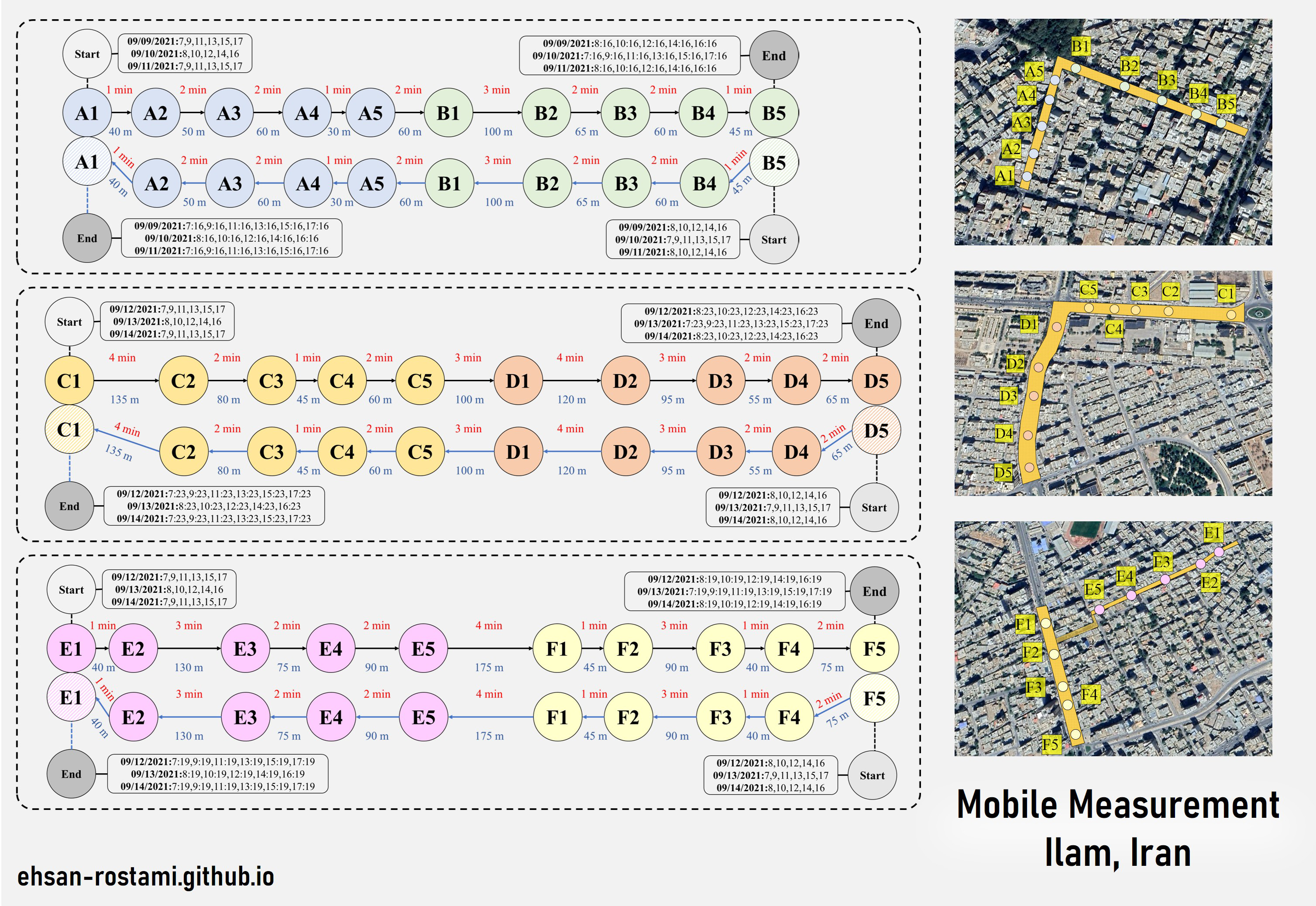
- Mobile Setup: Utilizing a portable tripod and calibrated sensors for efficient data collection.
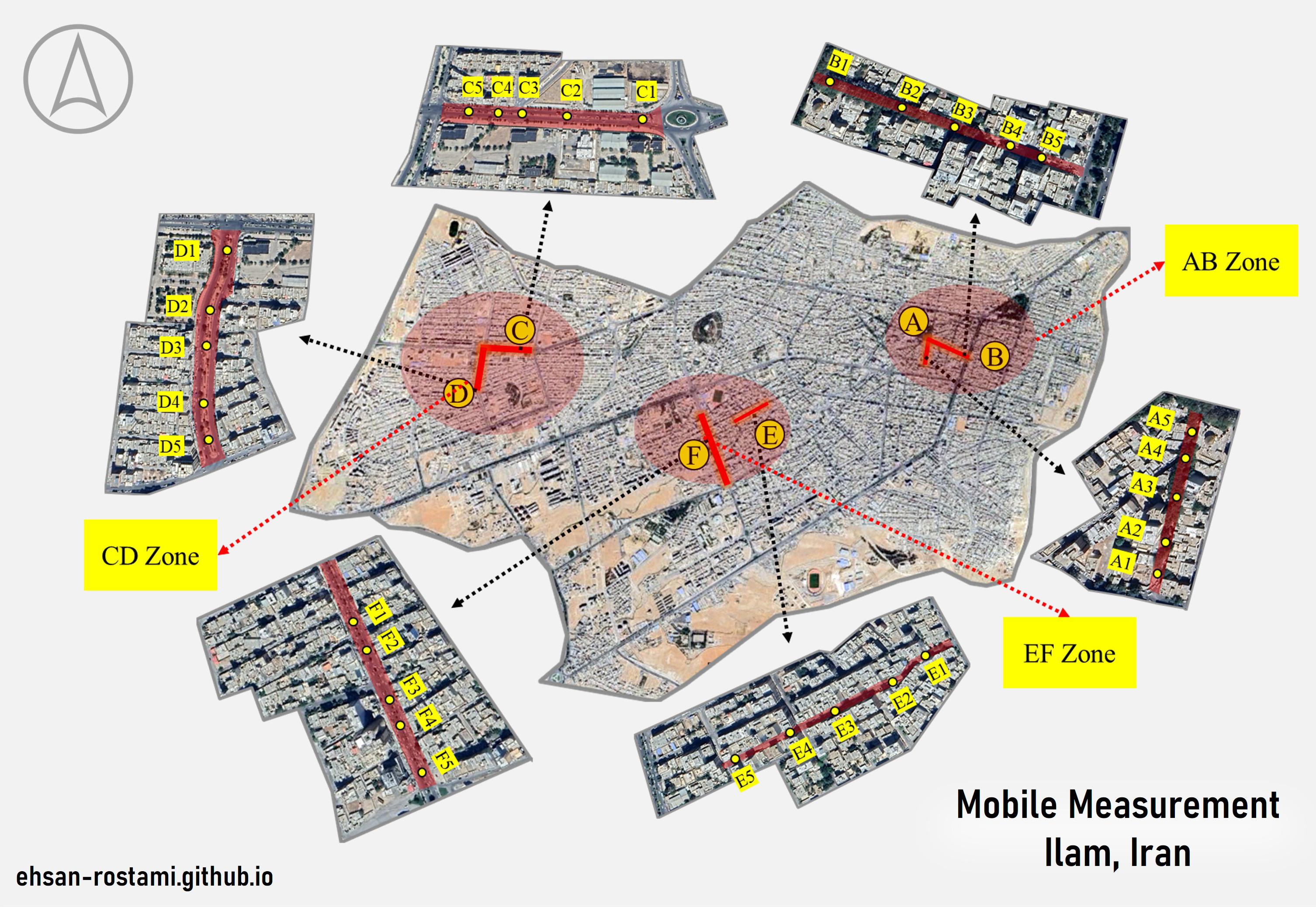
- Strategic Locations: Diverse urban canyon locations were selected based on variations in geometry, orientation, and vegetation.
- Temporal Sampling: Hourly measurements were implemented from 7:00 AM to 5:00 PM over consecutive days to capture diurnal variations.
- Data Analysis: Statistical techniques and software (Rayman Pro, Ladybug Tools) were employed to analyze collected data and derive conclusions.
Key Innovation
This mobile measurement method represents an advancement in urban microclimate research. By enabling rapid data acquisition across numerous locations, a more comprehensive understanding of microclimate variations within urban environments is facilitated. This is crucial for developing strategies for sustainable urban design and energy efficiency.
This project utilized one of the first mobile measurement methods for urban microclimate analysis in Ilam, Iran, particularly on this scale, for assessing parameters including solar radiation, illuminance, and air temperature.
Key Findings
The data collected through this method revealed correlations between urban morphology parameters (e.g., street width, building height, vegetation density) and microclimate conditions (e.g., solar radiation, illuminance, air temperature). This analysis has informed understanding of how urban design influences thermal comfort and energy performance in buildings.
Related Publications
This project is closely related to publications on the impact of urban morphology on solar potential and energy consumption. Please see the Publications page for more information.